
The young man sitting just in front of me messes with his watch and talks excitedly with his hands. He speaks quickly but quietly, punctuating his rapid fire speech with a suck of breath, a sly smile or a flick of his short blondish hair. The other youth sitting across from him is leaning in – listening, nodding and engaged – sharing a laugh, signaling his approval, fiddling with the plastic bottle cap on the table. Just behind them, the man with the dark complexion and serious eyes is leaning back in his chair, a Starbucks coffee sits on the table, alongside his laptop and his cell phone. I am in the middle of the room, settled on a long brown leather couch, my own laptop on my knees and my feet on the chair in front of me. All around me people are doing what we all do everyday in coffee shops – sitting together in conversation, working, studying, laughing. There is a cell phone in every hand. The whir of the espresso machine, and the loud knock of the portafilter handle against the sink provides ambiance and familiar comfort in the background.
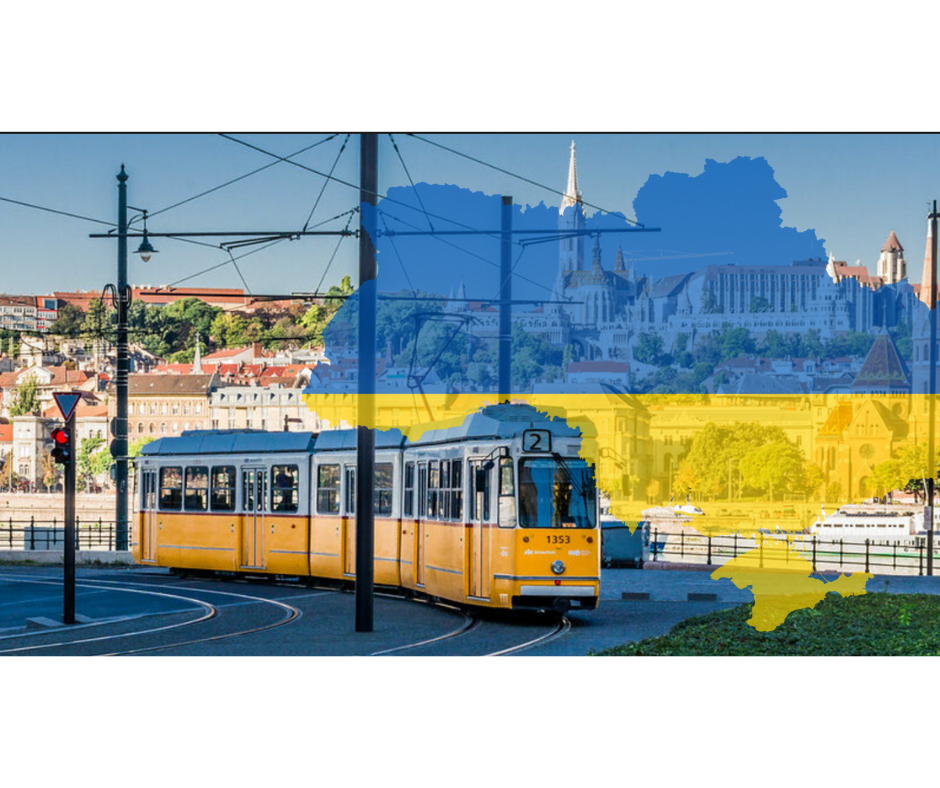
The wall sized window in front of me frames the Buda Castle complex and the Presidential palace on the hill overlooking the city. The yellow tram #2 stops briefly, a man in a business suit makes a run for it, he hops on and it continues on its scenic journey up the Danube.
I toured the Dohany Synagogue today. The second largest synagogue in the world, the largest when it was built in Hungary in the late 1800’s. There were only 2000 jews in the area at that time and only 50,000 people in all of Budapest. The synagogue seats nearly 3000, a seat for everyone and a nod to a growing community. Our tour guide, a Hungarian jew, tells the story of its construction. He describes the rare cosmopolitan nature of this synagogue, its moorish decorations, the 8 pointed star everywhere instead of the five pointed jewish one – a reflection of the cultural influence of the Arabs and an intention of union in a country at the crossroads of the east and west. The synagogue has a spectacular pipe organ, a few pulpits and other trappings reflecting the mix of catholic and community life. He speaks of the modern jews of the city, interested in embracing Hungarian cultural life and blending in. In 1939, Hungary formed part of the Axis powers in World War II, but remained sovereign over its people. Although suffering from forced labor in the war and other atrocities, the people forced into the jewish ghetto that was bordered by the Dohany street synagogue felt “protected” by then president Horthy’s desire to leave the Axis powers and appeal to the west as he recognized that the Nazi’s would lose the war. On October 14th, 1944 just hours after a decree of safety for the ghetto population, his government was toppled in a coup. What ensued in the following weeks is described in the tourism pamphlet, “Hungarian Jews were identified, plundered, ghettoized, deported, and murdered with a speed and efficiency virtually unparalleled in the history of the Holocaust.” The jewish Hungarian tour guide speaks good english but his storytelling is hard to follow, it seems to be as much in his head as it is out loud. “The killings were useless here”, he says, “just a month or so before the end of the war.” Of the 200,000 jews in Budapest in 1945, only 85,000 survived. Of the 500,000 of those in the countryside, where his grandparents were, almost all were killed at Auschwitz in just a few short weeks. He says that despite the state of the world and the evidence of genocide all around, his ancestors believed that nothing would happen to them. As it should be, the worthlessness of all of this is heavy in the air and even heavier in the hearts. A group of teenage tourists talk loudly and recklessly in the back. He lowers his head and waits for them to pass. I feel the weight of water behind my eyes, the insanity of persecution and powerlessness.
There were a few heroes, a Swiss Diplomat, Carl Lutz, who issued fake immunity papers to jews along the death march, giving them a free pass to return home. He inspired diplomats of other countries to do the same, saving thousands. But then, in the powerful aberration of cruelty amplified, those returning home with papers in hand were lined up along the Danube and told to remove their shoes, “the only item of value,” the soldier said, they were shot to fall into the river. 20,000, lives like mine.
A man on a bike cycles by outside the window. A grandpa pushes a stroller and hunches over a bit more in the brisk cold wind. Tourists holding hands are smiling in youth and love.
Yesterday Russia invaded Ukraine. A bordering neighbor of Hungary, the conflict is not hard to imagine as close. The vestiges of Russian occupation in Hungary are everywhere and part of modern history. The Russians were here in my lifetime, in my lifetime… in every tour of every historical monument there is the before and after, the dirty dark soot covered before and then emerging from it. This is how they describe it. Every time. I imagine that until yesterday, this description was the same for Ukraine. Occupied by Russia for more than 70 years, and then declared an independent democratic state in 1993. The before and after. The boys chatting in front of me, the busy cafe, the vibrant action of humanity going about their day, I imagine that this too was Kyiv. This too was Kyiv, just yesterday. The girl in the interview with CNN was barely in her twenties, “I woke up, I was going to have breakfast, I thought that the sounds were firecrackers outside, my boss called to say that we had been bombed, my parents rushed to find me, we packed a few things and now we are here.” She was being interviewed in a subway station turned bomb shelter, people are passing behind her as she speaks. Just yesterday she likely traversed the same station on a late night out with her friends. She can’t understand, her eyes are ringed in red, she holds in the tears and the camera scans over to her parents. They understand, you can see it in the clench of their jaw and entire being, they understand, they look away from the camera.
My friend Hank wrote to check on me. “You are still in Budapest, right? Maybe it is a good time to get out of the area for awhile.” Hank is of jewish descent, so am I. My great grandparents were Russian jews, they fled for the United States and survived. My family landed in Ohio and later in California, Hank’s family stayed in New York. I’m sure they didn’t imagine that it could happen to them – just like the jews of the Dohany Synagogue or the Ukranians of yesterday. I sit here, immersed in the lessons of near history and today’s story of the unprovoked invasion and yet I, surrounded by everyone else in this cafe, somehow believe that we could never suffer the same fate. But why, why such spectacular illusion? The tour guide asked and answered this question about his ancestors in Budapest, he said, “it’s just, that we are all wildly optimistic.” That’s it, the only explanation he can come up with.
Although I sit here and I cannot imagine that this could happen to me, it is not optimism that I feel. It is not optimism, it is inertia, the emptiness born in a lack of agency. Maybe we go on because we have no ability to go any other way? Life goes on until it doesn’t, is that what we must accept or that we somehow deeply understand? My heart constricts in anger and frustration at my inability to understand this human cruelty. A week earlier, I taught a workshop on purpose driven leadership, a conversation on how our deep rooted values and our core beliefs drive our behavior and in so doing, our leadership. What damage have we done to humanity that anyone can believe the things they must believe to somehow justify the horror they inflict? Putin and Hitler were surely once young, eager chattering boys like those sitting here by the window.
The yellow tram #2 passes by and continues on, the tenth or twelfth time since I’ve been sitting here. A dog chases after a stick in the park and brings it back to his owner, tail wagging. The well dressed woman smiles, and throws it again.
The man on the couch next to me is on the phone. I can feel the emotion in his words, although I don’t know what he says. His wife leans her head onto his shoulder and rubs her hand along his jacket. She is my age, a bit older, her eyes are puffy and she looks exhausted but the comfort she finds in his company is palpable, beautiful, simple. He puts the phone aside, she leans in deeper.